


Pilgrims from all corners of the world come to Pavia to encounter Saint Augustine, the “icon of conversion”
Updated: Mar 21

On the pilgrimage to Tor Vergata, Rome, to participate in World Youth Day 2025 with Pope Leo XIV, groups of young people from Chile, Argentina, Panama, Florida, and the New York neighborhood of Brooklyn stopped in Pavia to express their faith and friendship to Saint Augustine.
In recent days, the Basilica of San Pietro in Ciel d’Oro, where the remains of our beloved father rest, has been filled with youthful voices, songs in many languages, knowing smiles, and silences rich with spirituality. The Jubilee pilgrims, bearers of hope, passed through here to meet Saint Augustine, master and seeker of truth. A “happy” stop—intense and moving—among centuries-old stones that guard a boundless faith.
We spoke with Fr. Aldo Bazan OSA, friar of the convent who accompanied many of these groups over the summer in their deep understanding of this great saint.
Fr. Aldo, how many groups passed through?
We kept track of the number when they registered back in the spring, before the election of our dear Pope Leo XIV, but then we lost count. In addition to the booked groups, others arrived spontaneously and integrated very well with those already present, sharing liturgies, catechesis, and reflections. This too is a beautiful sign of communion in Augustine’s name.
Where did they come from?
From all over the world: Western and Eastern Europe, North and South America, some from Asia such as pilgrims from Sri Lanka, and even an Egyptian group. Among the unregistered ones, there were certainly people from some African countries as well.

What are young people looking for in Saint Augustine? And what do they find?
They seek many things, very diverse, but all contained within the journey of conversion that Augustine describes so precisely in the Confessions: an intelligible faith, a guide to understanding the Word of God without the errors experienced by young Augustine… Ultimately, a closeness to someone who wasn’t perfect but made it through.
What do young people find in him?
They find a friend who knows what true friendship means—both in confused times before conversion and in luminous ones after. They find a friend who lived their same passions, who had a successful civil career but realized it wasn’t enough to reach true happiness.
They also discover, often with surprise, a mother—Saint Monica—who never abandoned her son, even when she didn’t share his life choices, and who prayed, prayed, prayed. They find the affections of a family—a real family—distant in time but not in heart.
Did the young people who arrived in Pavia already know Saint Augustine?
Certainly, in one way or another: some through philosophical studies, others by reading his works, others still because they belong to a parish dedicated to Saint Augustine or are part of an Augustinian group… all sorts. The group leaders generally did a good job preparing them. That’s why our presence as Augustinian friars was very useful—by listening to their comments and questions, we were able to clarify aspects they didn’t know or hadn’t grasped in their importance.
For example?
I really liked the title of a catechesis proposed by a Spanish-speaking group: Saint Augustine, Icon of Conversion. It’s a title that encapsulates much of his experience. We know that Jesus, from his very first words in the Gospels—“The time is fulfilled, the Kingdom of God is near: repent and believe in the Gospel”—emphasizes the centrality of conversion to the true God, and thus the entire Christian story is a story of conversion from the very first moment.
In this, Saint Augustine is not the first convert, but he is the first to explore his entire life through the lens of God’s providence and mercy, which accompanied him even when he wasn’t aware of it.
What is told in the Confessions transcends time because Augustine enters the depths of the restless heart, which is always the same in every era, and reveals the reasons for a journey—certainly a bumpy one—that finds the true path only when it becomes truly open to accepting the guidance of Another and stops trying to do everything alone.
The episode of tolle, lege is the first seed of true humility that Augustine experiences. But there’s something else that struck me deeply.
What are you referring to?
Saint Augustine “alone.” He’s often spoken of as a “solitary hero” of his time: we can debate the term “hero,” but calling him “solitary” is a serious mistake.
Not only is his entire life filled with friends—some short-lived, others lifelong like Alypius—but even a moment as personal, intimate, and particular as tolle, lege, which opens Augustine to conversion… is a moment he immediately shares with Alypius, also sparking his conversion, and together they go to Monica to tell her what happened.
This aspect surprised everyone and showed the young people how important it is to share the faith they were living together on this pilgrimage. True friendship also has an important place in our relationship with God.
What would you say the pilgrims took away from Pavia?
The beauty of a faith shared and lived in community, a good friend to keep in mind when things seem to go wrong, the awareness that despite all the mistakes we make, we are loved and guided by a Father who watches over our path to help us become true children of His.
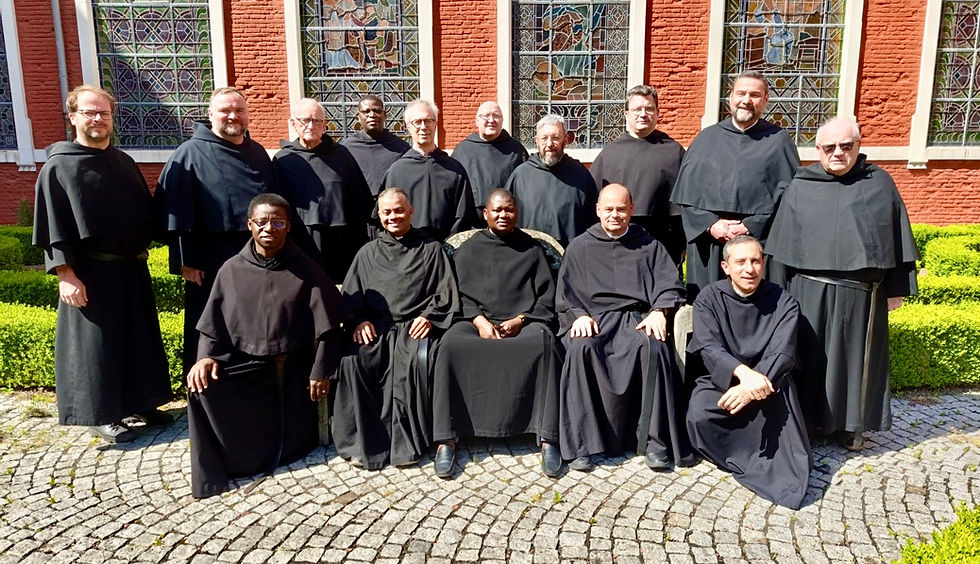
And I also hope they were able to take with them the sign of a small community of Augustinian friars who continue to keep alive today that flame they came to venerate and for which they prayed for many reasons—some expressed, others kept in their hearts—and which they can always consider a little bit like home.



Comments